
Looking for how to use pancake swap?, then “Ultimate Guide to PancakeSwap” is for you.
Another food-themed DeFi protocol? You know it. PancakeSwap is a Binance Smart Chain-based DEX launched by anonymous devs with a penchant for breakfast foods and rabbits.
It looks a bit like Ethereum’s SushiSwap (community governance, the ability to farm liquidity provider tokens), but also incorporates some kind of staking mechanism.
Introduction
Table of Interests
The food-based farming craze has captivated participants in the crypto space for months. In the latest wave of DeFi protocols, we’ve seen numerous platforms emerge that allow users to stake their funds in return for the protocol’s tokens.
The bulk of this activity has been concentrated on the Ethereum blockchain. As one of the earliest blockchains supporting smart contracts, it has a sprawling community of users, developers, and tools for building powerful decentralized applications.
In this article, we’ll take a look at PancakeSwap – a newly-launched decentralized exchange built on Binance Smart Chain.
What is PancakeSwap?
PancakeSwap is a decentralized exchange for swapping BEP20 tokens. Familiar with SushiSwap? Then you’ll have no issue grasping PancakeSwap. Both are incredibly similar in design.
The exchange
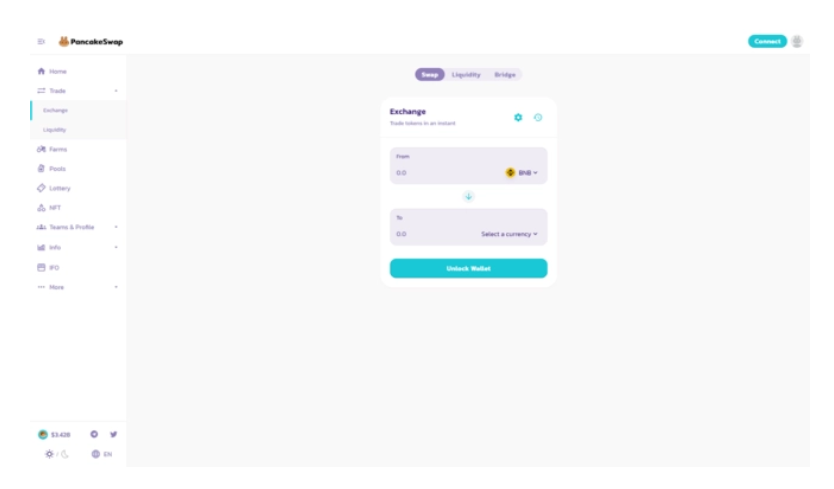
PancakeSwap uses an automated market maker (AMM) model. That means that while you can trade digital assets on the platform, there isn’t an order book where you’re matched with someone else. Instead, you trade against a liquidity pool.
Those pools are filled with other users’ funds. They deposit them into the pool, receiving liquidity provider (or LP) tokens in return. They can use those tokens to reclaim their share, plus a portion of the trading fees.
In line with the pancake aesthetic, the LP tokens are called FLIP tokens. You’ll find these in several flavors – if you added, say, BUSD and BNB to the pool, you’d receive BNB-USDT FLIP tokens in return. BAND and BNB? You’d get BAND-BNB FLIP tokens.
Farming and staking
But wait, there’s more! PancakeSwap also allows you to farm a secondary token – CAKE.
Yum.
On the farm, you can deposit your LP tokens, locking them up in a process that rewards you with CAKE. So far, there appear to be twelve different kinds of tokens you can deposit:
- CAKE-BNB FLIP
- BUSD-BNB FLIP
- ADA-BNB FLIP
- BAND-BNB FLIP
- DOT-BNB FLIP
- EOS-BNB FLIP
- LINK-BNB FLIP
- BAKE-BNB Bakery LP
- BURGER-BNB FLIP
Now, you’re probably thinking this protocol doesn’t have enough tokens. Good news! There’s one more – the SYRUP token.
So you’ve deposited some funds to receive LP tokens, and you’ve used them to farm CAKE. From there, you can stake your CAKE tokens to receive SYRUP, which will have further functionality as governance tokens (and as tickets in an upcoming lottery mechanism).
According to the site, newly-minted CAKE is issued in the following manner:
75% is allocated to token farmers
25% is allocated to SYRUP holders
Using PancakeSwap
You’ll notice, if you visit pancakeswap.finance, that many features are inaccessible until you Unlock Wallet. Click on a button prompting you to do so, and you’ll be met with two options: MetaMask, and WalletConnect. But wait, we hear you say, isn’t MetaMask an Ethereum wallet?
Yes it is, but the architecture of Binance Smart Chain is such that you can use MetaMask to interact with BSC-based DApps. If you choose to use MetaMask, we suggest you check out the How to Use MetaMask guide, then follow the steps in the Binance Chain Docs to hook it up with Binance Smart Chain.
Once you’ve got that set up, you can unlock your wallet to reveal additional information.
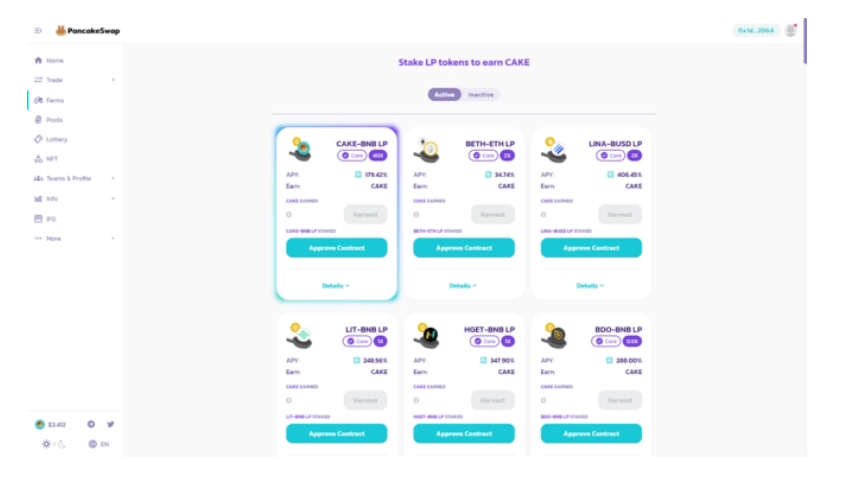
Different LP tokens promise different returns.
Adding liquidity
Again, if you’ve used SushiSwap previously, then you know the drill. To farm CAKE, you need to first add liquidity to the exchange.
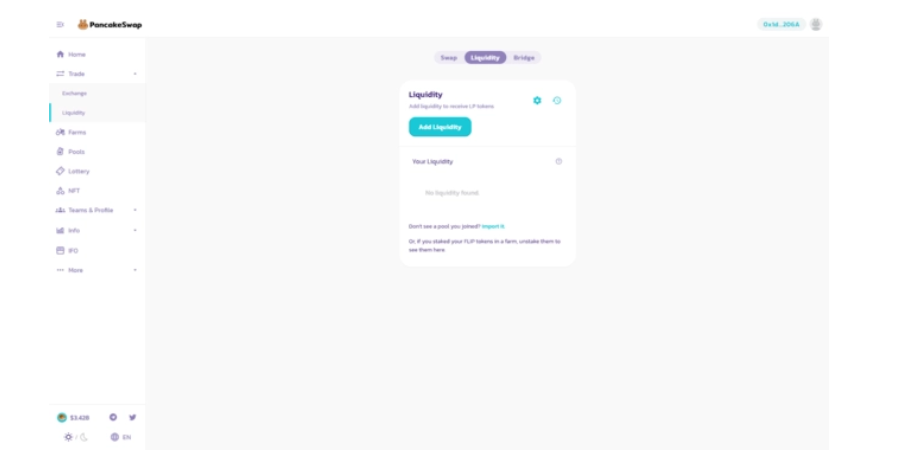
Simply hit Add Liquidity, then select the pair you want to deposit.
Farming
Okay, so you’ve got your FLIP tokens. Navigate back to the Farm display, and select the option that matches your LP tokens.
When we click Approve BUSD-BNB FLIP, a MetaMask popup will ask us to confirm the transaction, and display a fee.
Once that transaction confirms, simply select the amount you want to stake and confirm it. You can navigate away from the page and come back at any time to check how much CAKE you’ve earned – if you want to harvest it at any point, click on Harvest and confirm the transaction.
➟ Looking to get started with cryptocurrency? Buy Bitcoin on Binance!
Staking
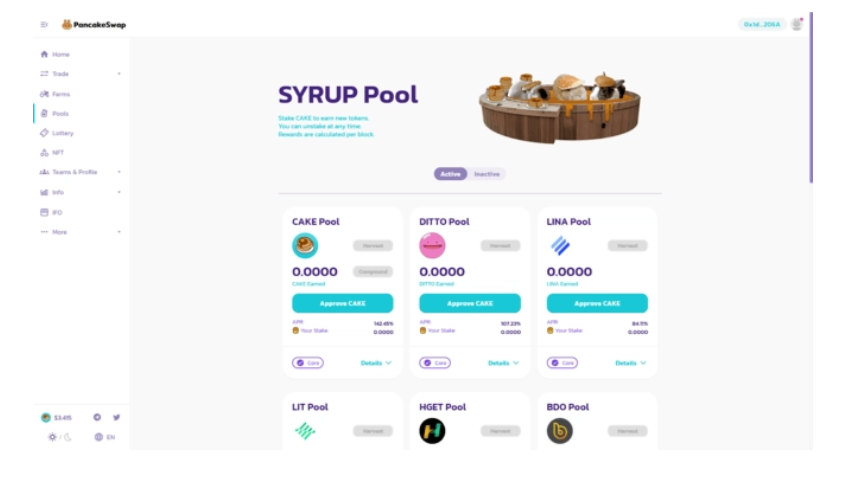
Once you’ve got your CAKE, you can stake that to earn SYRUP. Hit Staking at the top of the page, and you’ll be presented with the display below.
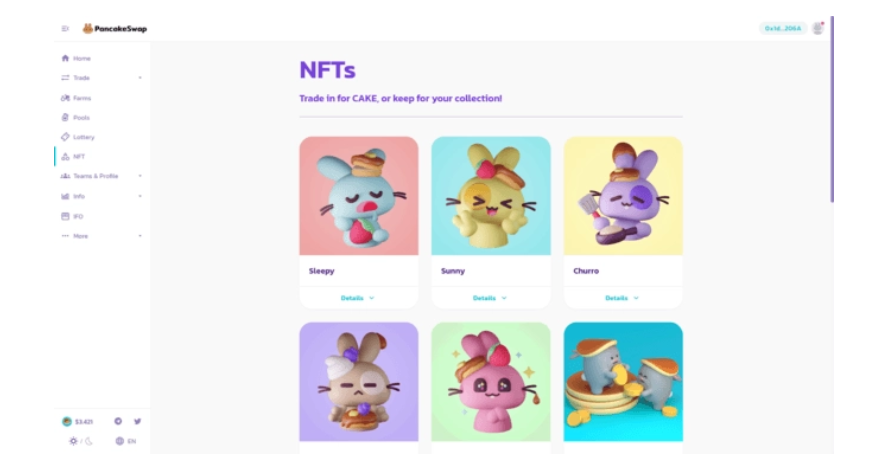
We have no idea what firemen have to do with pancakes, either.
Once again, you need to approve the withdrawal of your tokens. Hit Approve Cake to do so.
When that has been approved, you’ll need to select the amount of CAKE you want to stake.
Now that the CAKE has been staked, you’ll now have an equal amount of SYRUP and will now be earning CAKE passively.
Upcoming features
The PancakeSwap webpage teases at two new features coming to the protocol – Staking and Lottery. The details of these have not been released, but from the looks of the documentation, the Lottery will utilize the SYRUP tokens received from staking CAKE.
This section will be updated as more information becomes available.
Is PancakeSwap safe?
PancakeSwap has been audited. Depositing funds into a smart contract always carries the risk of bugs, even for audited and highly reputable projects. Never deposit more than you can afford to lose.
Closing thoughts
The developers of PancakeSwap cite high fees and slower speeds of the Ethereum blockchain as a driving factor in building on Binance Smart Chain. Ethereum may have kick-started the DeFi trend, but initiatives like PancakeSwap suggest that the wave of innovation is destined to spread to other chains. The PancakeSwap contract has not yet been audited
Common Cryptocurrency Scams on Mobile Devices
Ultimate Guide to Symmetric versus Asymmetric Encryption
How Blockchain Is Used in The Internet of Things (IoT)
Ultimate Guide to Understanding What Makes a Blockchain Secure
Upto Date Blockchain Use Cases
Initial Coin Offering List – Comprehensive List of Projects Currently Doing ICO
Ultimate Guide to Initial Coin Offering (ICO)
Ultimate Guide to Understanding What Fractional Reserve is
Understanding Why Public WiFi Is Insecure
The Ultimate History of Cryptography
Understanding what DoS Attack is
Ultimate Guide to what Fiat Currency is
Ultimate Guide to zk-SNARKs and zk-STARKs
Things to Avoid When Using Binance Chain
How Blockchain Is Used In Charity
How Blockchain is Used in Supply Chain
Ultimate Guide to What a Replay Attack is
Ultimate Guide to Delegated Proof of Stake
Ultimate Guide to what Ransomware is
Ultimate Guide to understanding Cryptojacking
Ultimate Guide to Understanding Inflation for Beginners
How to Know Cryptocurrencies Pyramid and Ponzi Schemes
Ultimate Beginner’s Guide to Bitcoin’s Lightning Network
Advantages and Disadvantages Of Blockchain
Ultimate Guide to Ethereum Plasma